Towards Ukraine’s EU Membership: A Journey with an Uncertain Future — roundtable discussion
On Friday, 6 November 2026, the Foreign Policy Research Institute, with organizational support from the State Enterprise ‘Directorate-General for Rendering Services to Diplomatic Missions’, held a roundtable discussion entitled Towards Ukraine’s EU Membership: A Journey with an Uncertain Future.
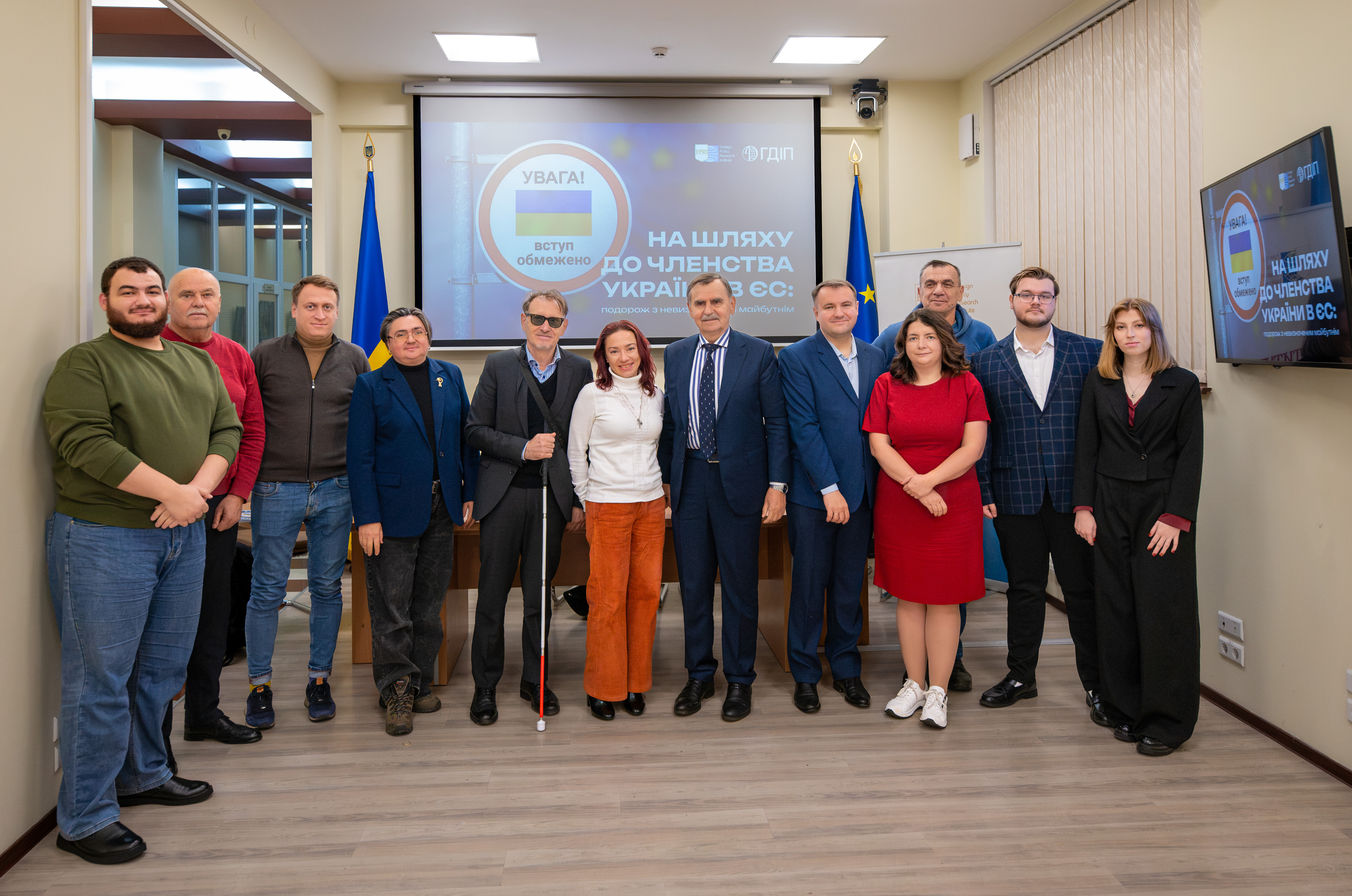
Hryhorii Perepelytsia, director of the Foreign Policy Research Institute, full professor in the Department of International Relations and Foreign Policy at Taras Shevchenko National University of Kyiv, and Doctor of Political Science, moderated the event.
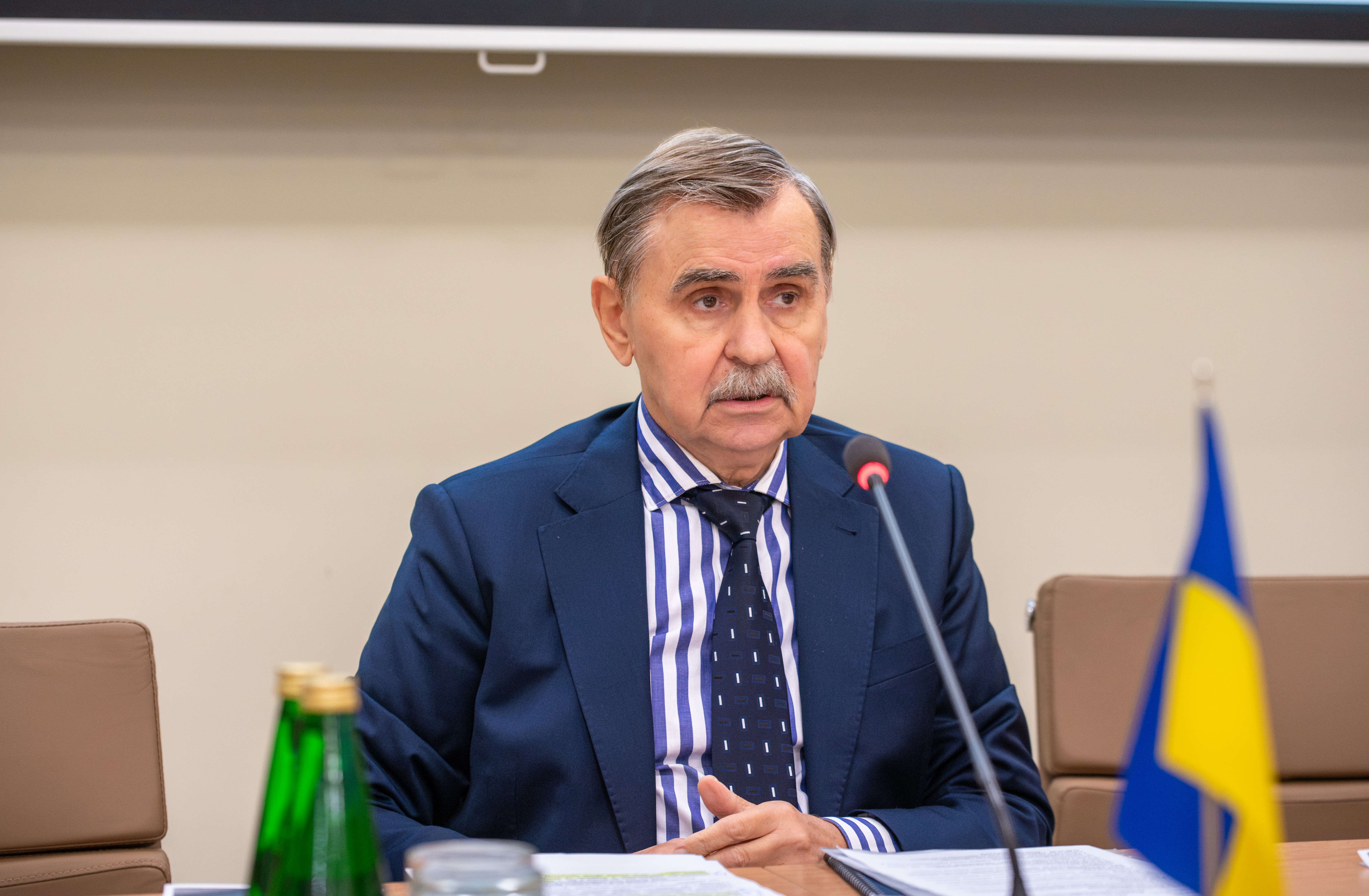
Opening the roundtable, Hryhorii Perepelytsia outlined the main challenges and prospects for Ukraine’s European integration. He emphasized the complexity of the path to EU membership, the need to implement reforms, and the importance of taking Moldova’s experience into account. The moderator highlighted the significance of reforms in the rule of law, justice, and human rights protection, alongside efforts to strengthen the state’s institutional capacity and to gradually integrate Ukraine into the EU single market, even before full membership. He also noted that 2027 would be an important milestone in determining the future course of European integration, given both the tasks Ukraine faces at home and political and security changes in Europe: ‘Implementing the reforms under these clusters will be crucial to strengthening our competitiveness in today’s world and building a new, reformed economy integrated into the European Union’s single market.’
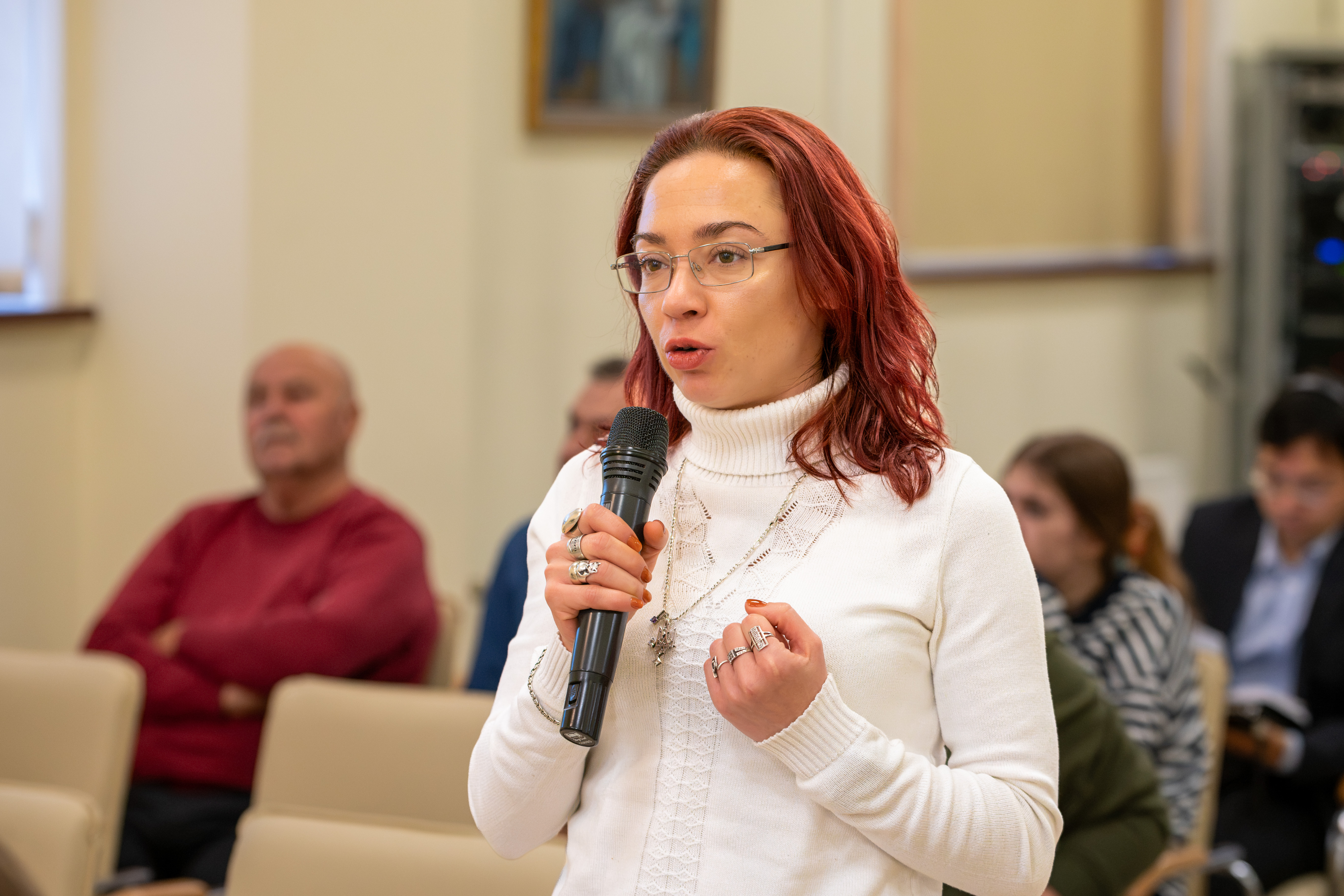
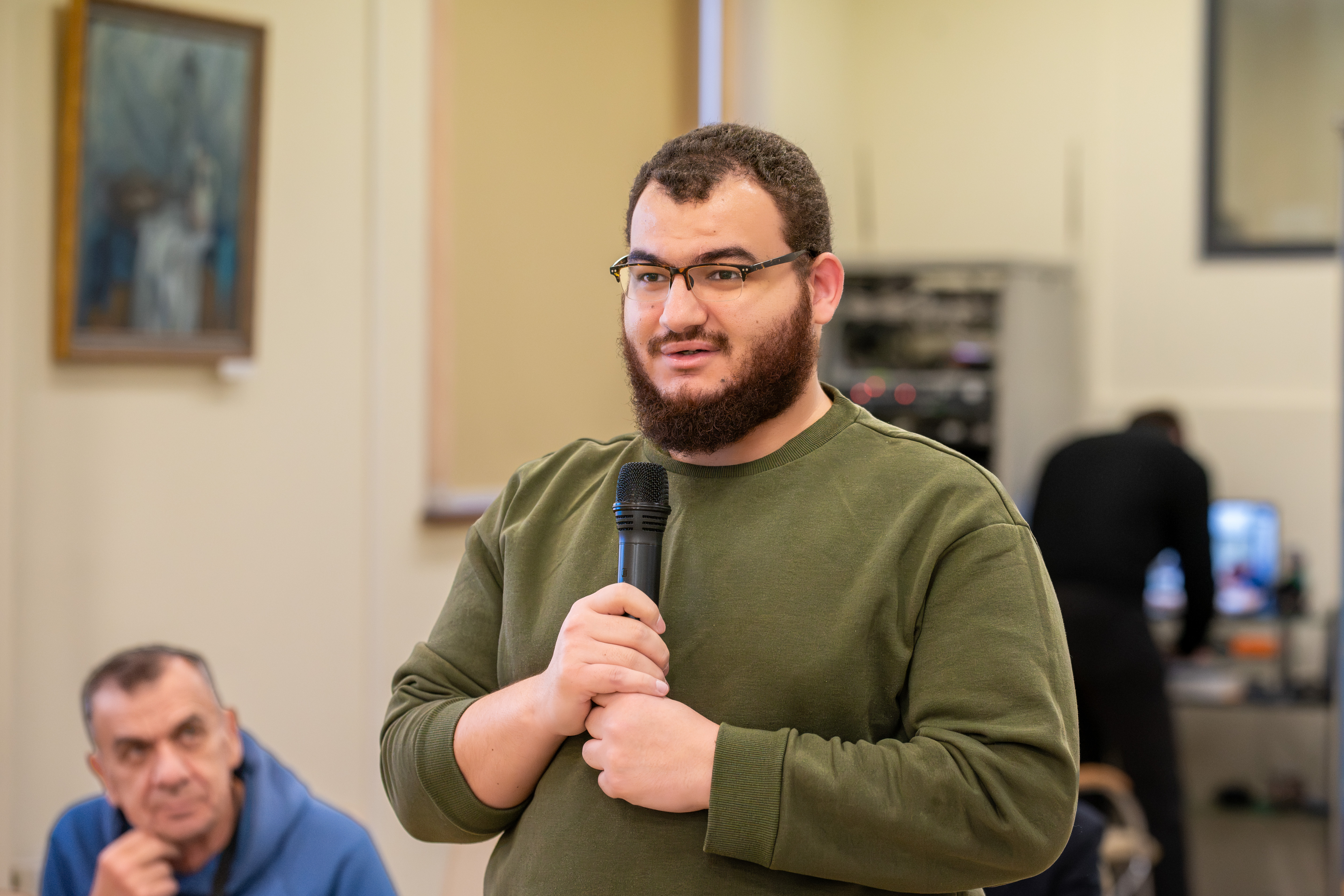
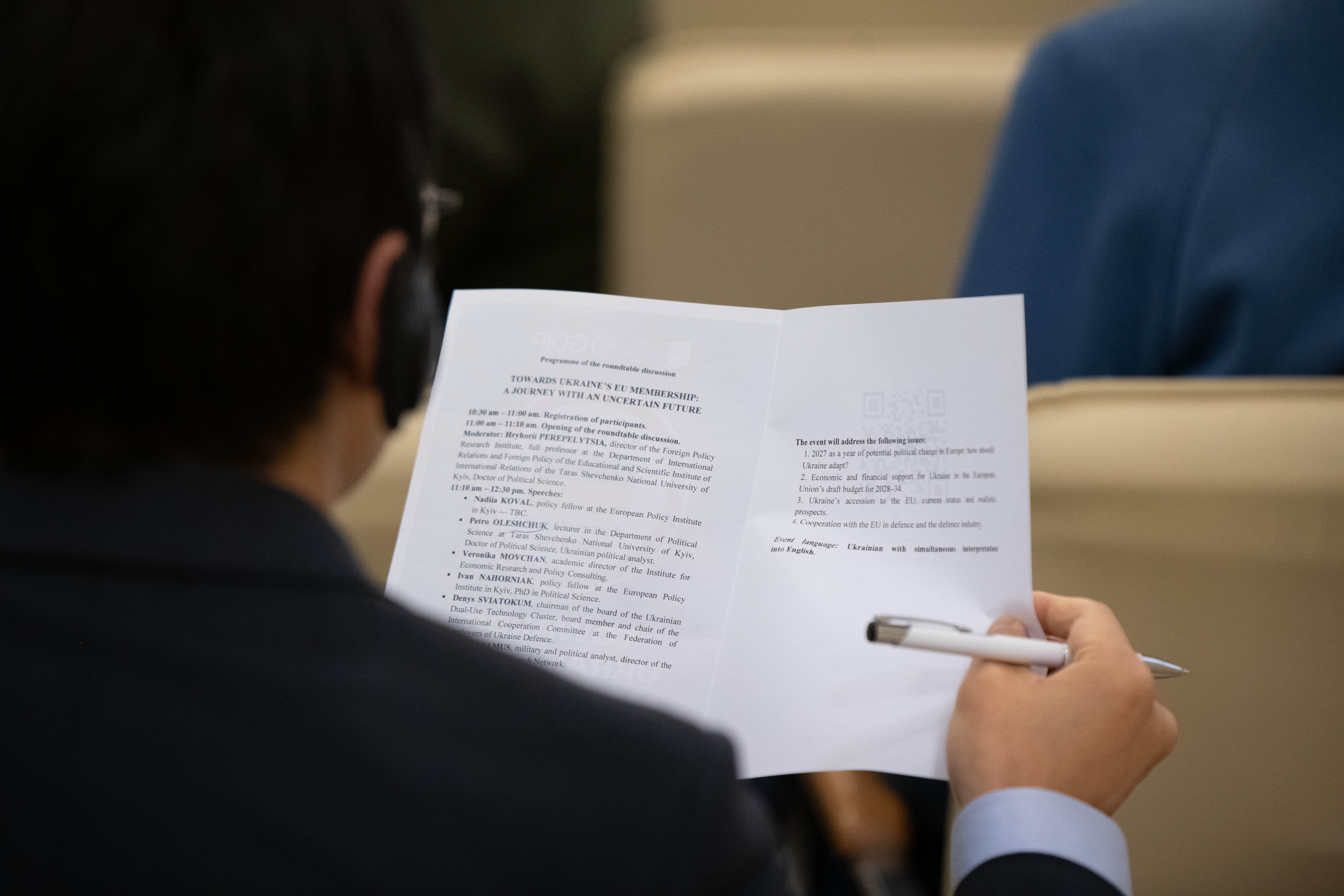
The roundtable speakers were Nadiia Koval, policy fellow at the European Policy Institute in Kyiv; Petro Oleshchuk, lecturer in the Department of Political Science at Taras Shevchenko National University of Kyiv, Doctor of Political Science, Ukrainian political analyst; Veronika Movchan, academic director of the Institute for Economic Research and Policy Consulting; Ivan Nahorniak, policy fellow at the European Policy Institute in Kyiv, PhD in Political Science; and Denys Sviatokum, chair of the board of the Ukrainian Dual-Use Technology Cluster, board member and chair of the International Cooperation Committee of the Federation of Employers of Ukraine Defence.
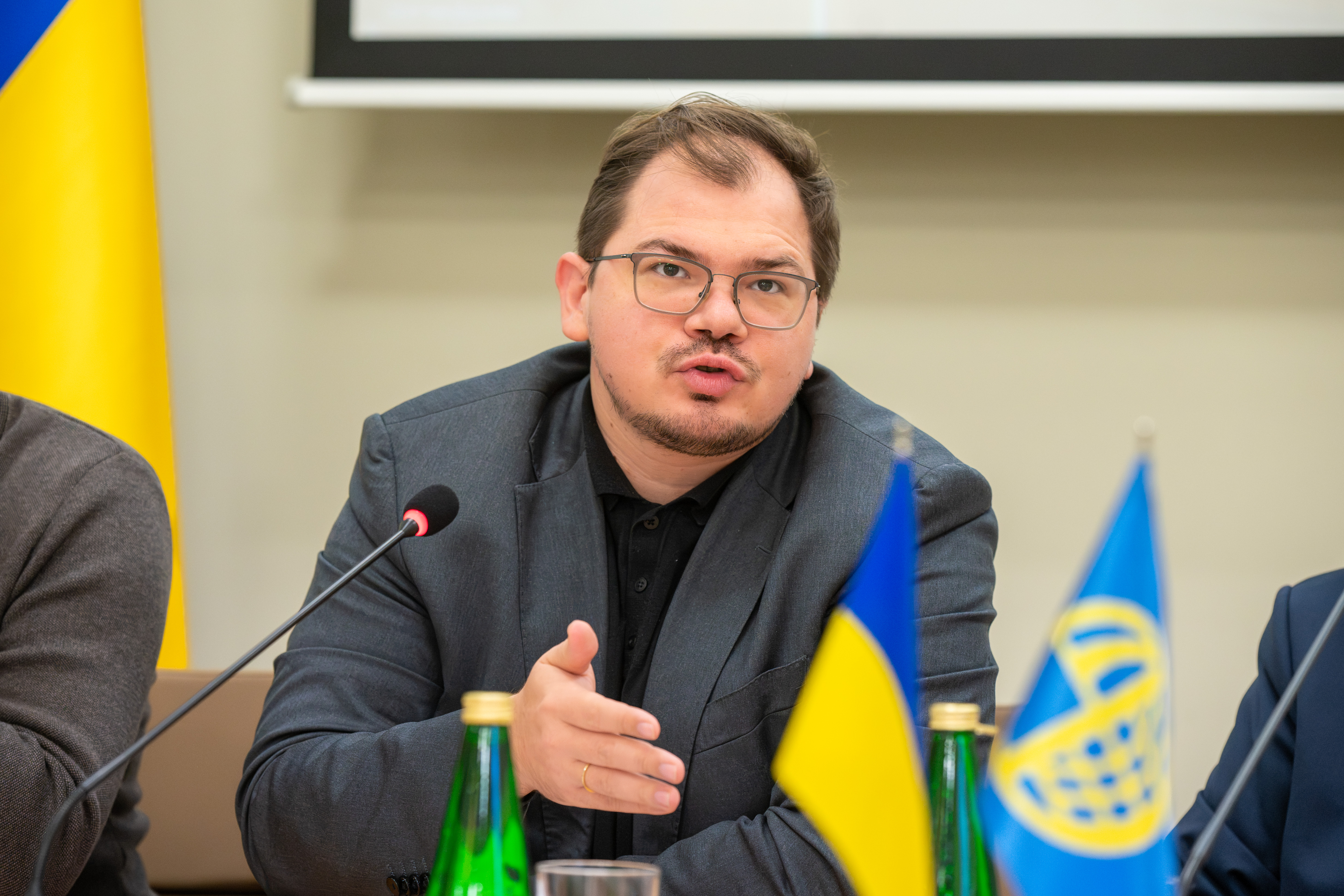
Ivan Nahorniak, policy fellow at the European Policy Institute in Kyiv, PhD in Political Science
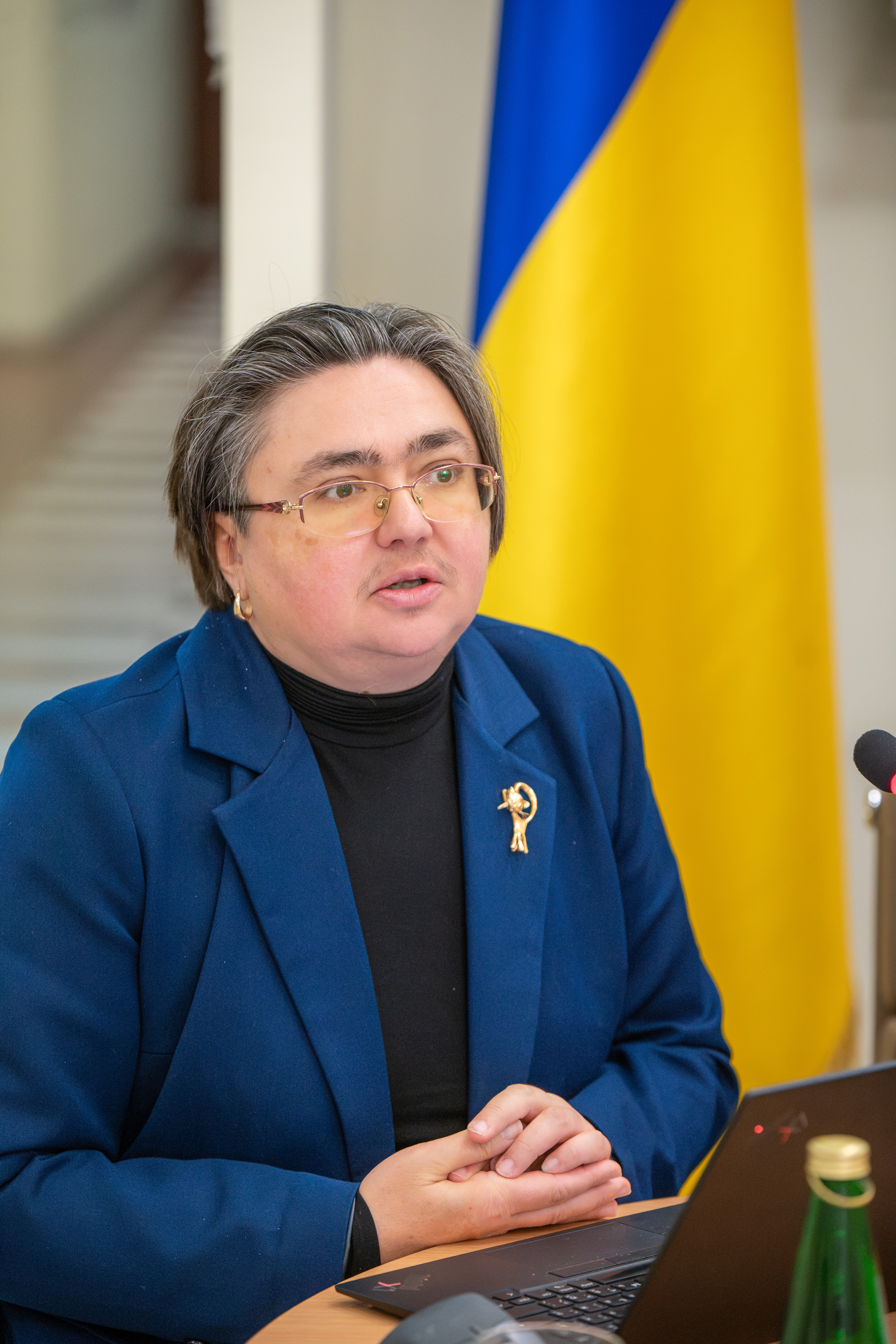
Veronika Movchan, academic director of the Institute for Economic Research and Policy Consulting
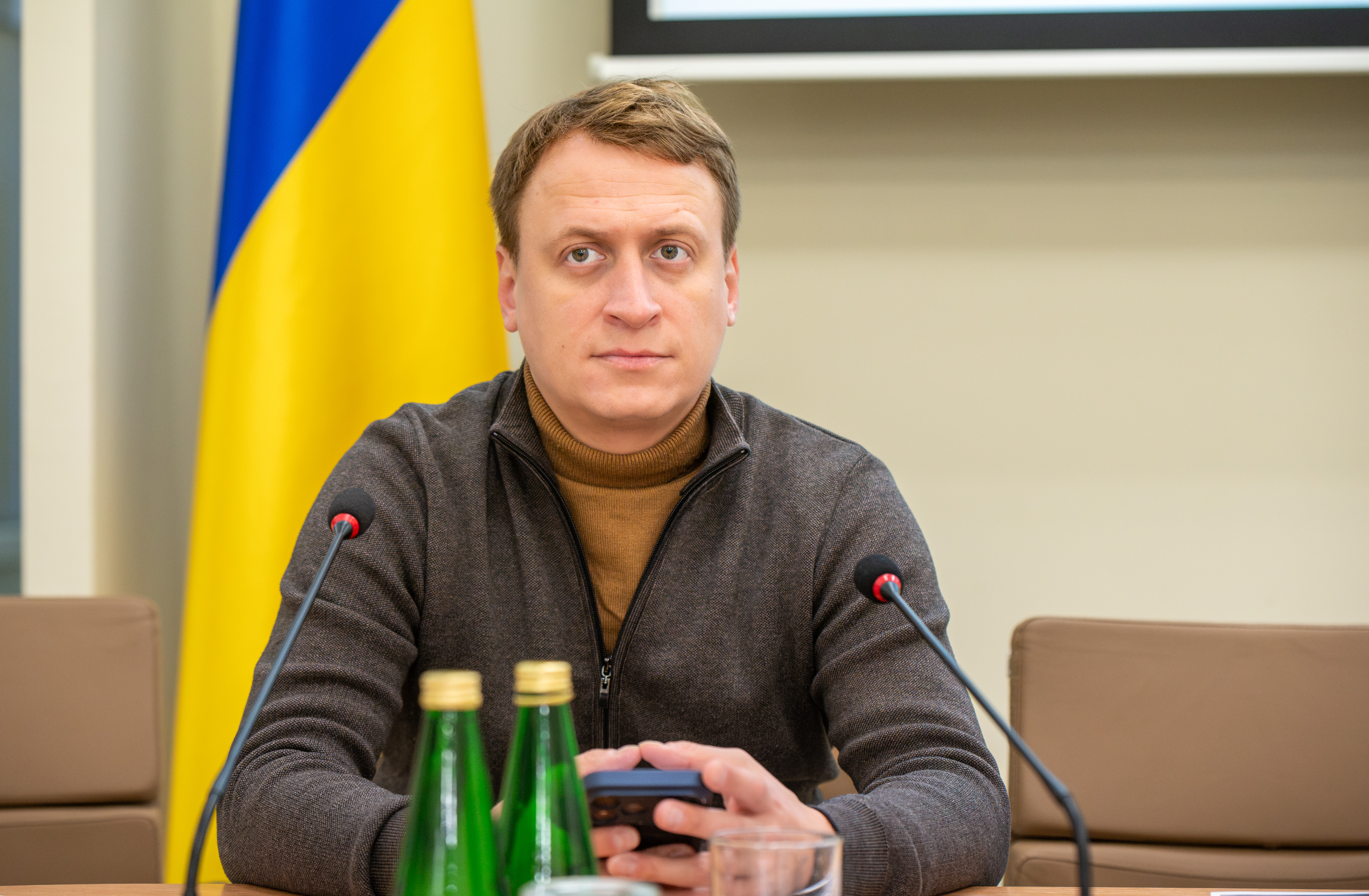
Denys Sviatokum, chairman of the board of the Ukrainian Dual-Use Technology Cluster, board member and chair of the International Cooperation Committee at the Federation of Employers of Ukraine Defence
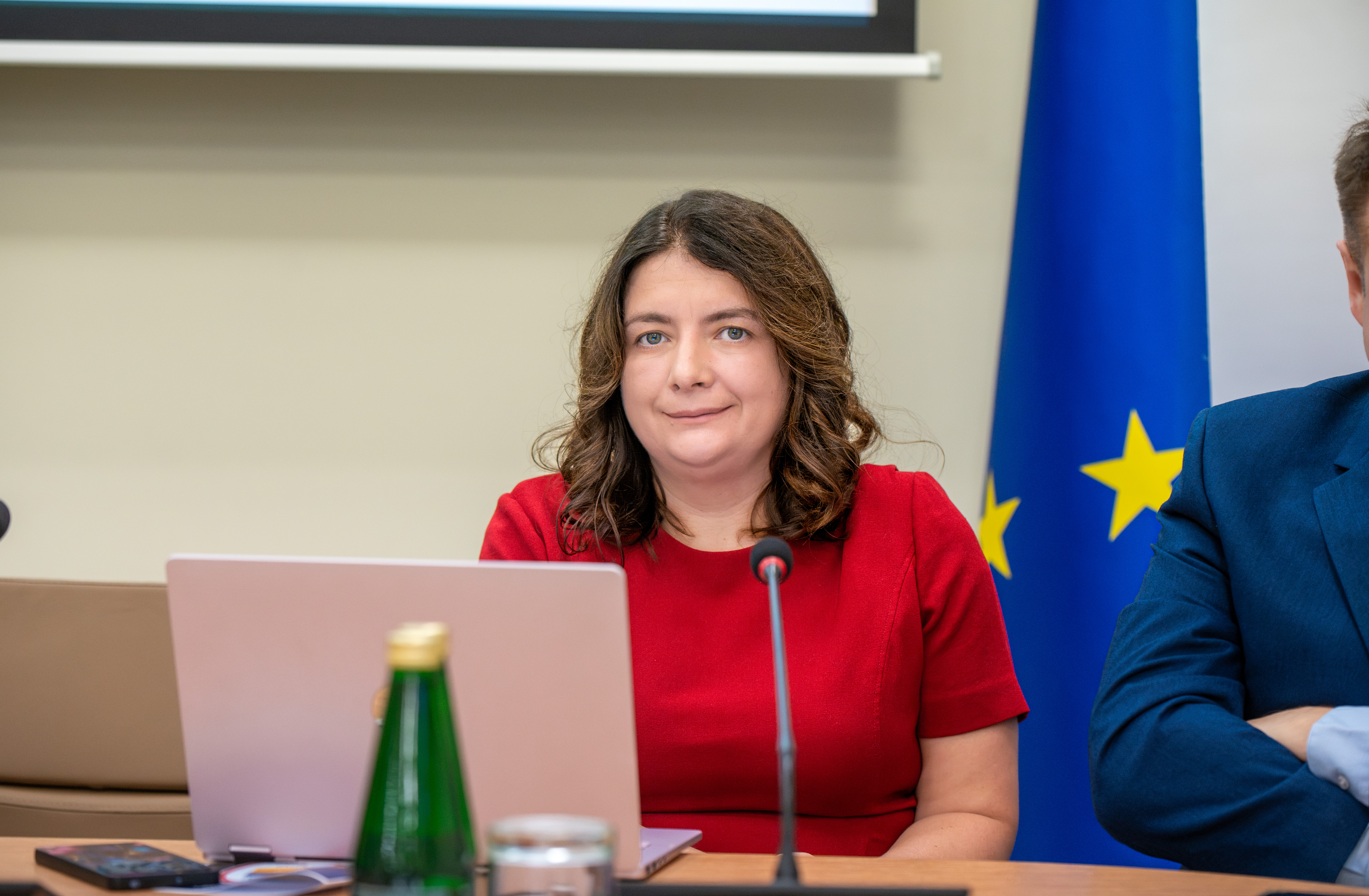
Nadiia Koval, policy fellow at the European Policy Institute in Kyiv, and Petro Oleshchuk, lecturer in the Department of Political Science at Taras Shevchenko National University of Kyiv, Doctor of Political Science, Ukrainian political analyst
The event featured an expert discussion of several important issues: 2027 as a year of potential political change in Europe and how Ukraine should adapt; economic and financial support for Ukraine under the proposed EU budget for 2028–34; the current state of Ukraine’s EU accession process and its realistic prospects; and cooperation with the EU in defence and the defence industry.
In her remarks, Nadiia Koval analysed two main trends that would shape Europe’s political landscape in 2027: the strengthening of the European Union’s strategic autonomy and the growing influence of Eurosceptic and far-right political forces. She stressed that the results of forthcoming elections in France, Italy, Poland, and other countries could directly affect EU unity, continued support for Ukraine, sanctions policy, and the prospects for EU enlargement. ‘The window of opportunity is narrowing with time, and we need to make the most of it,’ she said, emphasizing the need to secure partners’ financial and political support in advance, accelerate the implementation of reforms, and intensify dialogue with different political forces in Europe.
Petro Oleshchuk emphasized that, despite the importance of meeting the requirements of the negotiating clusters and implementing the necessary reforms, the final decision on Ukraine’s membership would be primarily political. He recalled that Ukraine’s European choice had been one of the main factors behind russian aggression as early as 2014, while the full-scale invasion ultimately demonstrated the failure of the strategy to preserve Ukraine as a buffer zone between Russia and the West. He also drew particular attention to russia’s active interference in European political processes and its support for various political forces that oppose EU unity and assistance for Ukraine. ‘Ukraine’s accession to the European Union will, in any case, be a political decision,’ he stressed, emphasizing that Ukraine’s European integration must be considered not only through the lens of reforms and the negotiating process but also in a broader geopolitical context.
The expert presentations were followed by a lively discussion involving scholars, lecturers, students, and diplomats.